Reverse Osmosis System for Davenport, IA & the Quad Cities
If you're on Iowa American Water in Davenport, you already know your tap water comes from the Mississippi River. What you may not know is what else comes along with it — and why a reverse osmosis system is one of the most direct ways to deal with it at your faucet. Midwest Water installs reverse osmosis (RO) drinking water systems for homes and businesses across Davenport, Moline, Rock Island, Bettendorf, and the surrounding Quad Cities. We carry and service systems that remove the contaminants most commonly flagged in local water reports, and we back every installation with ongoing filter service so your system keeps working the way it should.
What's in Davenport's Drinking Water — and Why It Matters
Iowa American Water serves roughly 147,000 people in Davenport, drawing from the Mississippi River and treating it before it reaches your tap. The treatment process itself is effective at controlling bacteria — but it creates a separate set of concerns.
Chlorine disinfection byproducts (DBPs): When chlorine interacts with natural organic matter in Mississippi River water, it forms compounds called trihalomethanes (TTHMs) and haloacetic acids. Independent water quality analysis has found that total trihalomethanes in Davenport's supply exceed health-based guidelines established by organizations like the Environmental Working Group, even when levels remain within EPA legal limits. Specific compounds detected include chloroform, bromodichloromethane, and dibromochloromethane — all classified as probable human carcinogens.
PFAS ("forever chemicals"): Iowa DNR testing confirmed the presence of PFAS in Iowa American Water's Davenport supply. Under the EPA's updated 2024 rules, Davenport is among 12 Iowa systems required to meet federal compliance by 2029. The Iowa DNR has noted that PFAS were detected across 94% of surface water sources statewide. These compounds don't break down in the environment or in the human body, and long-term exposure is linked to cancer risk, immune system disruption, and developmental effects in children.
Lead: Lead can enter Davenport drinking water at the point of service through aging pipes and household plumbing. Water quality analysis of Davenport has detected lead at levels that make point-of-use filtration a practical, protective measure for families. Under-sink RO systems are NSF/ANSI 58 certified to reduce lead at the tap.
The legal limit is not the same as the safe limit. Compliant water can still contain contaminants at levels that public health researchers consider elevated — especially for children, pregnant women, and people with compromised immune systems. A reverse osmosis system gives you a second line of defense, right at the tap where your family drinks.
How a Reverse Osmosis System Works
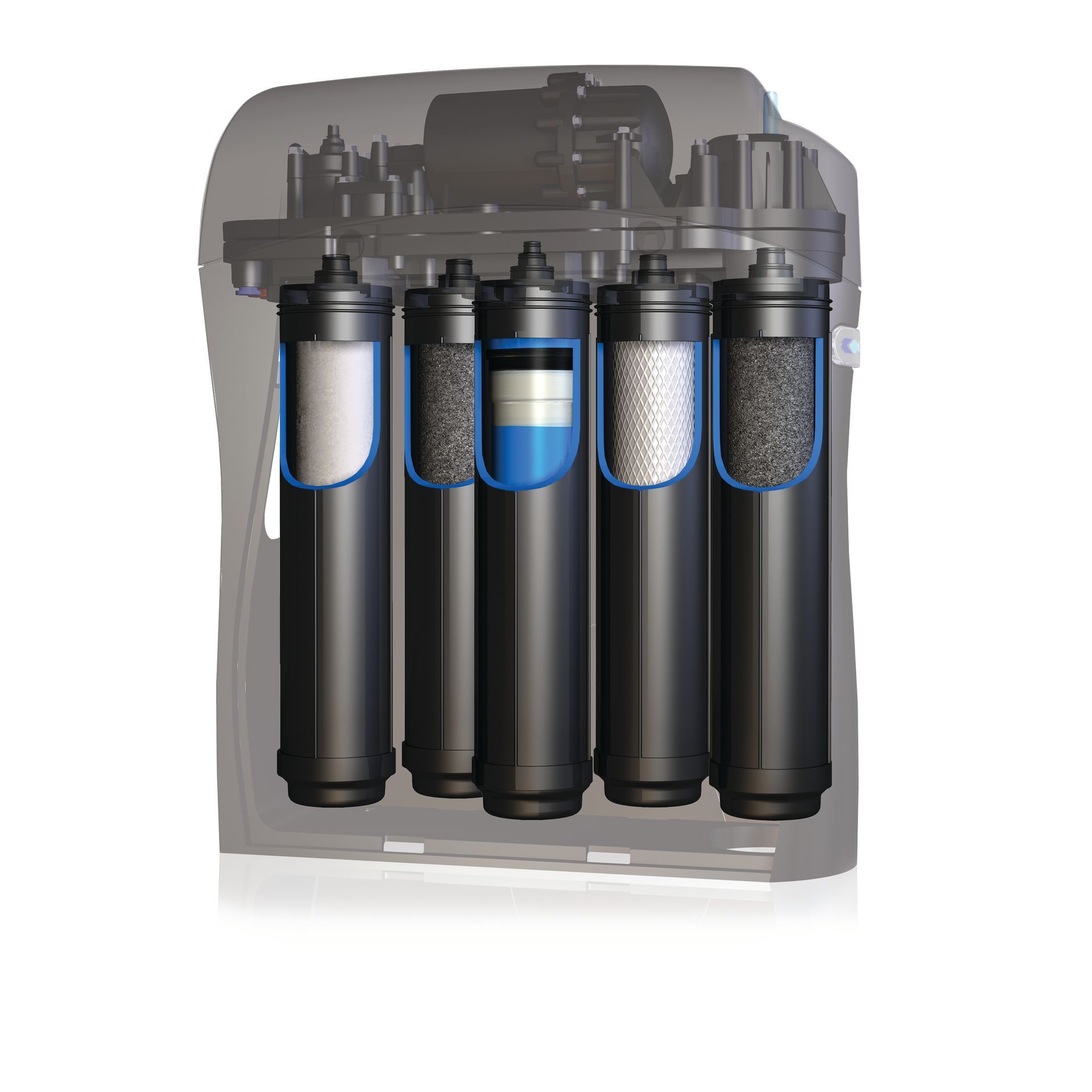
A reverse osmosis system forces water through a semi-permeable membrane under pressure. The membrane's pores are small enough to block dissolved solids, heavy metals, chemical compounds, and microorganisms — sending the concentrated waste down the drain while delivering filtered water to a dedicated faucet or refrigerator line.
Stage 1. Sediment pre-filter: Catches sand, silt, and particulate matter from the distribution system before it reaches the membrane.
Stage 2. Carbon pre-filter: Reduces chlorine and chloramine, protecting the RO membrane and removing a significant share of disinfection byproducts.
Stage 3. Reverse osmosis membrane: The core of the system. Reduces dissolved solids including lead, PFAS, nitrates, fluoride, arsenic, and a broad range of organic and inorganic contaminants.
Stage 4. Post-carbon polishing filter: Improves taste and removes any residual odors before the water reaches your glass.
The result is water that tastes clean because it is — without buying cases of single-use bottles.
Why Quad Cities Homeowners Choose Midwest Water
We're a local operation based in Moline, IL. We serve the Illinois and Iowa sides of the Quad Cities — Moline, East Moline, Rock Island, Davenport, Bettendorf, and surrounding communities. That means we know what's in the regional water supply, we stock parts for the systems we sell, and when your membrane needs replacing in three years, you're not shipping a filter cartridge from a warehouse in another state.
We test before we recommend. We test before we recommend. A free water test tells us what's actually in your water before we suggest anything. You'll get a written result, not a sales pitch.
We install properly. An RO system installed without checking supply pressure, drain line compatibility, or storage tank size is a system that underperforms. We size and install every system to your home's specific plumbing.
We service what we sell. Filter cartridges need replacing every 6–12 months depending on your water and usage. We track your system and reach out when it's time.
We pair RO with softening when it makes sense. Davenport area water is hard. A water softener installed upstream of the RO system extends membrane life and addresses both problems at once.
What Does the K5 Filter Out?
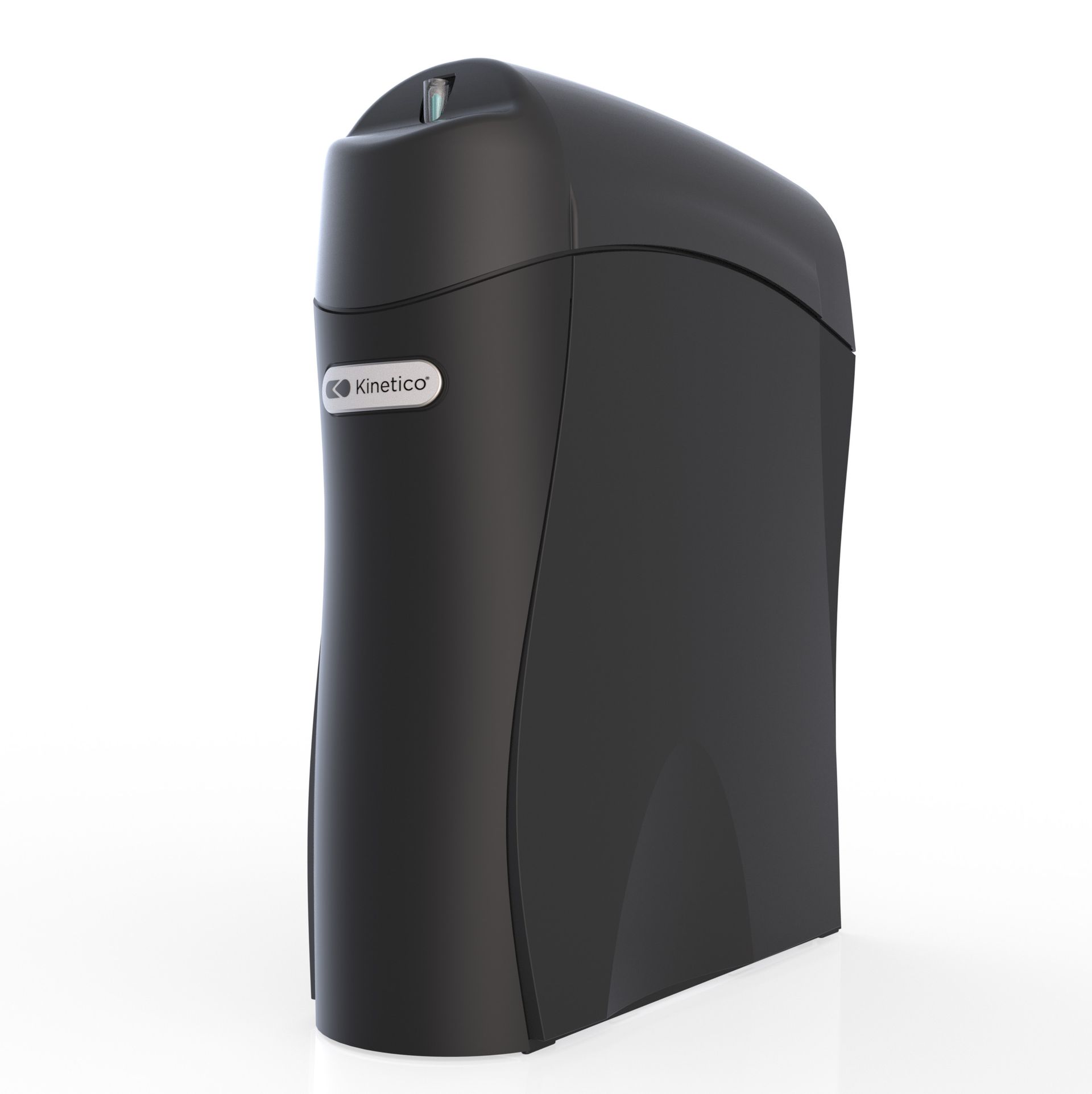
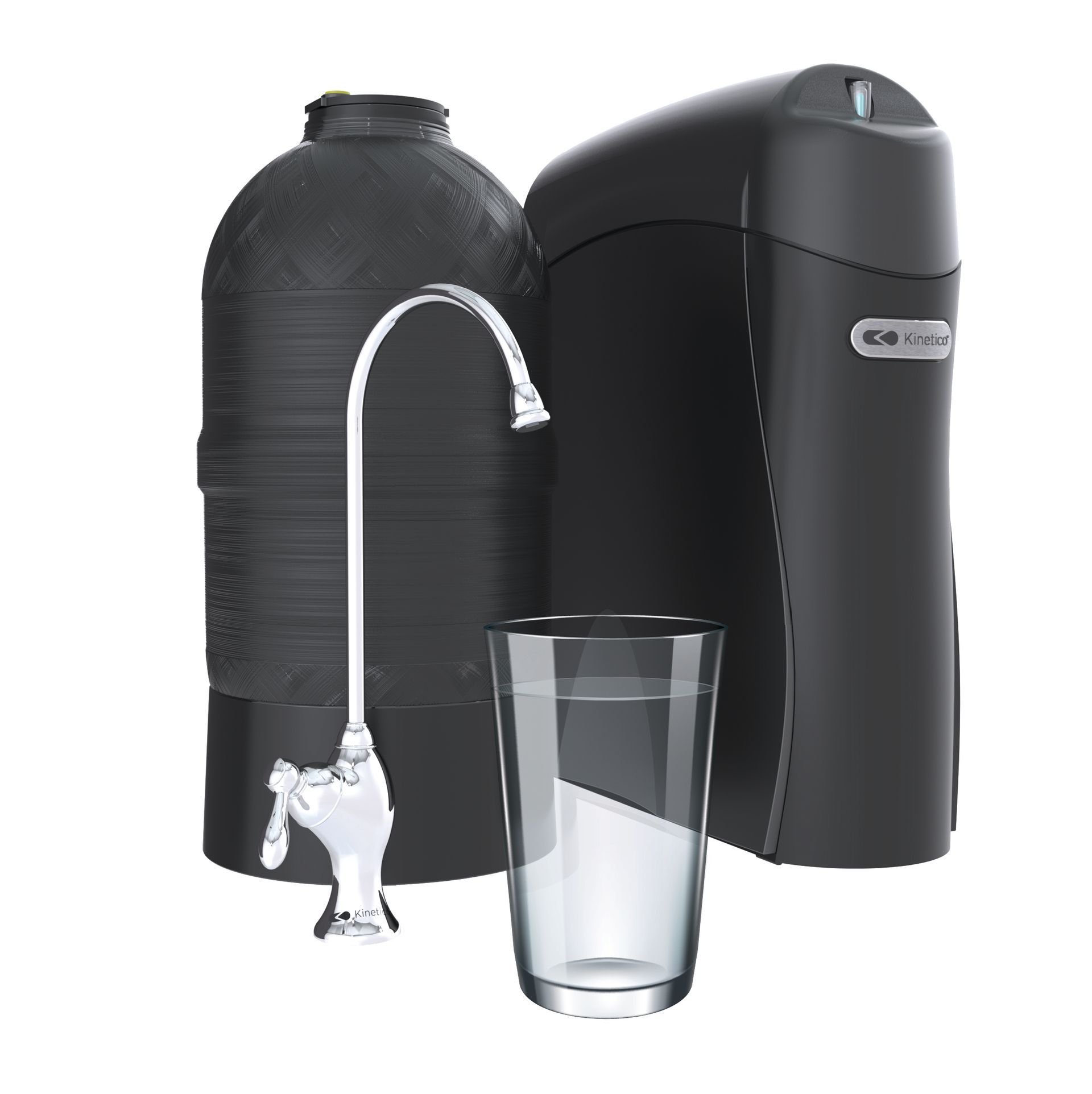
The Kinetico K5 is NSF-certified to reduce a wide range of harmful contaminants, including:
PFAs
(Per- and Polyfluoroalkyl Substances) Often called "forever chemicals," PFAS have been linked to serious health concerns, including certain cancers, immune system disruption, and hormonal effects.
Lead
Lead can leach into drinking water from aging pipes and plumbing fixtures. There is no safe level of lead exposure for children, and long-term exposure in adults is associated with cardiovascular and kidney issues.
DBPs
Chlorine and chloramine are used to disinfect water, but these chemicals can form disinfection byproducts such as trihalomethanes (THMs) and haloacetic acids (HAAs). Exposure to Disinfection Byproducts (DBPs) has been associated with increased health risks.
Contaminants
The K5 also reduces arsenic, nitrates, cysts, pharmaceuticals, volatile organic compounds (VOCs), and many other substances that standard filtration systems miss.
What a Reverse Osmosis System Removes from Davenport Water
- PFAS / PFOA / PFOS — reduced by certified RO membranes, one of the most effective point-of-use methods available
- Lead — NSF/ANSI 58 certified systems reduce lead at the tap regardless of distribution pipe conditions
- Total trihalomethanes and haloacetic acids — reduced by the combination of carbon pre-filtration and RO membrane
- Nitrates — passed through carbon filters but caught by the RO membrane, relevant given Iowa's ongoing agricultural runoff concerns
- Total Dissolved Solids (TDS) — Davenport's TDS runs approximately 340 ppm; a quality RO system reduces that by 94% or more
Frequently Asked Questions
Is RO water safe to drink?
Yes. The Water Quality Association has evaluated reverse osmosis treated water and found it poses no health concerns for healthy individuals. While RO removes most minerals along with contaminants, the minerals in drinking water are a minor dietary source — food provides the overwhelming majority of your daily mineral intake. If remineralization matters to you, we can add a remineralizing post-filter stage.
How often do RO filters need replacing?
Pre- and post-filters typically need replacement every 6–12 months. The RO membrane itself lasts 2–3 years under normal usage. We keep filter kits in stock locally and offer scheduled service so replacements happen on time.
Can an RO system connect to my refrigerator ice maker?
Yes. We run a dedicated line from the storage tank to your refrigerator during installation. Your ice and chilled water will be filtered the same as your dedicated faucet.
What Is a Kinetico K5 Drinking Water Station?
Multi-Stage Filtration at Your Dedicated Tap
The Kinetico K5 is one of the most advanced residential reverse osmosis systems available today. It uses a multi-stage filtration process to remove contaminants at the molecular level — producing water that is consistently cleaner and better-tasting than ordinary tap water and most bottled water brands.
Unlike standard pitcher filters or basic faucet attachments, the K5 is a whole-drinking-water solution. It's installed directly into your home's water supply and delivers filtered water through a dedicated faucet at your kitchen sink. The system operates non-electrically, using your home's water pressure to push water through its membranes and filters — meaning no energy costs and no complicated controls.
Benefits of Installing a Kinetico K5 in Your Home
Better-Tasting Water, Every Time Pure water simply tastes better. Removing chlorine, minerals, and chemical byproducts reveals the clean, neutral taste water is supposed to have. You'll notice the difference in your drinking water, your coffee, your tea, and anything else you cook with water.
Save Money — Eliminate Bottled Water The average American family spends hundreds of dollars per year on bottled water. The K5 delivers better-than-bottled quality at a fraction of the ongoing cost. It also eliminates the hassle of storing, carrying, and recycling plastic bottles — better for your wallet and better for the environment.
Customizable Filtration The K5 features a unique FlexFiltration design that allows filtration cartridges to be customized to your specific water quality concerns. Whether your local water has elevated PFAS levels, high chlorine content, or other regional issues, the K5 can be configured to address them directly.
Reliable, Non-Electric Operation The Kinetico K5 runs without electricity, using only your home's existing water pressure. That means lower operating costs, no risk of electrical failure, and a simpler, more dependable system overall.
Dedicated Filtered Water Faucet A sleek, dedicated faucet is installed alongside your existing kitchen faucet, giving you instant access to filtered water for drinking and cooking whenever you need it. Many models also include a refrigerator line connection for filtered ice and water from your fridge dispenser.
Is a Reverse Osmosis System Right for Your Home?
If your household relies on municipal tap water, you've noticed an unpleasant taste or odor in your water, you have young children or family members with compromised immunity, or you simply want the peace of mind that comes with knowing your drinking water is clean — the Kinetico K5 is an excellent choice.
We recommend starting with a free water quality test so we can understand exactly what's in your water and confirm the K5 is the right fit for your needs.
Drinking Water System Questions, Answered Plainly
What does a Kinetico drinking water system actually remove from my tap water?
A Kinetico drinking water system is designed to reduce chlorine, chloramines, sediment, certain heavy metals, volatile organic compounds, and the compounds that cause taste and odor issues. The specific contaminants addressed depend on what the free water test finds in your home's water supply — that's why we test first before recommending anything.How is an under-sink drinking water system different from a Brita pitcher?
The biggest differences are capacity and convenience. An under-sink system treats water on demand through multiple filtration stages — no manual refilling, no waiting, no guessing when the filter ran out. A Brita pitcher uses a single carbon stage and runs out of capacity fast. With a dedicated tap, clean water is always there when you need it.How long does it take to install a drinking water system under my kitchen sink?
Most installations are completed in a single visit, typically one to two hours. Our technician handles all the connections, mounts the dedicated drinking water tap, and tests the system before leaving. There's no overnight disruption to your kitchen and no mess left behind.How often do the filters need to be replaced in a Kinetico drinking water system?
Filter replacement frequency depends on your water usage and the specific contaminant load in your water supply. We advise you on the right replacement schedule during installation, based on what the free water test shows, and we can handle filter replacement for you as needed down the road.Can I add a drinking water system if I already have a water softener?
Yes — a point-of-use drinking water system works independently from a whole-home softener. It installs under the sink and treats only the water coming from the dedicated drinking tap, so it doesn't interfere with your softener's operation at all. Many Quad Cities homeowners run both, and it's a natural combination.
Schedule a Free Water Test in Davenport or the Quad Cities
Not sure what's in your water? We'll test it — free. Bring a sample to our Moline location or schedule a home visit. You'll get a straightforward breakdown of what we found and what, if anything, makes sense to do about it. No pressure, no obligation.
We serve Davenport, Bettendorf, Moline, East Moline, Rock Island, and surrounding Quad Cities.





