Reverse Osmosis System vs. Whole House Water Filtration: Which Is Right for Your Quad Cities Home?
Moline, IL, draws its municipal supply from the Mississippi River, and the water quality concerns here are specific: elevated mineral hardness, chlorine added during treatment, trace sediment, agricultural runoff compounds, and confirmed PFAS detections. That context matters before picking a system.
Both reverse osmosis and whole house filtration improve your home's water. The right choice depends on what your water actually contains and where you need clean water most.
How Does a Reverse Osmosis System Work?
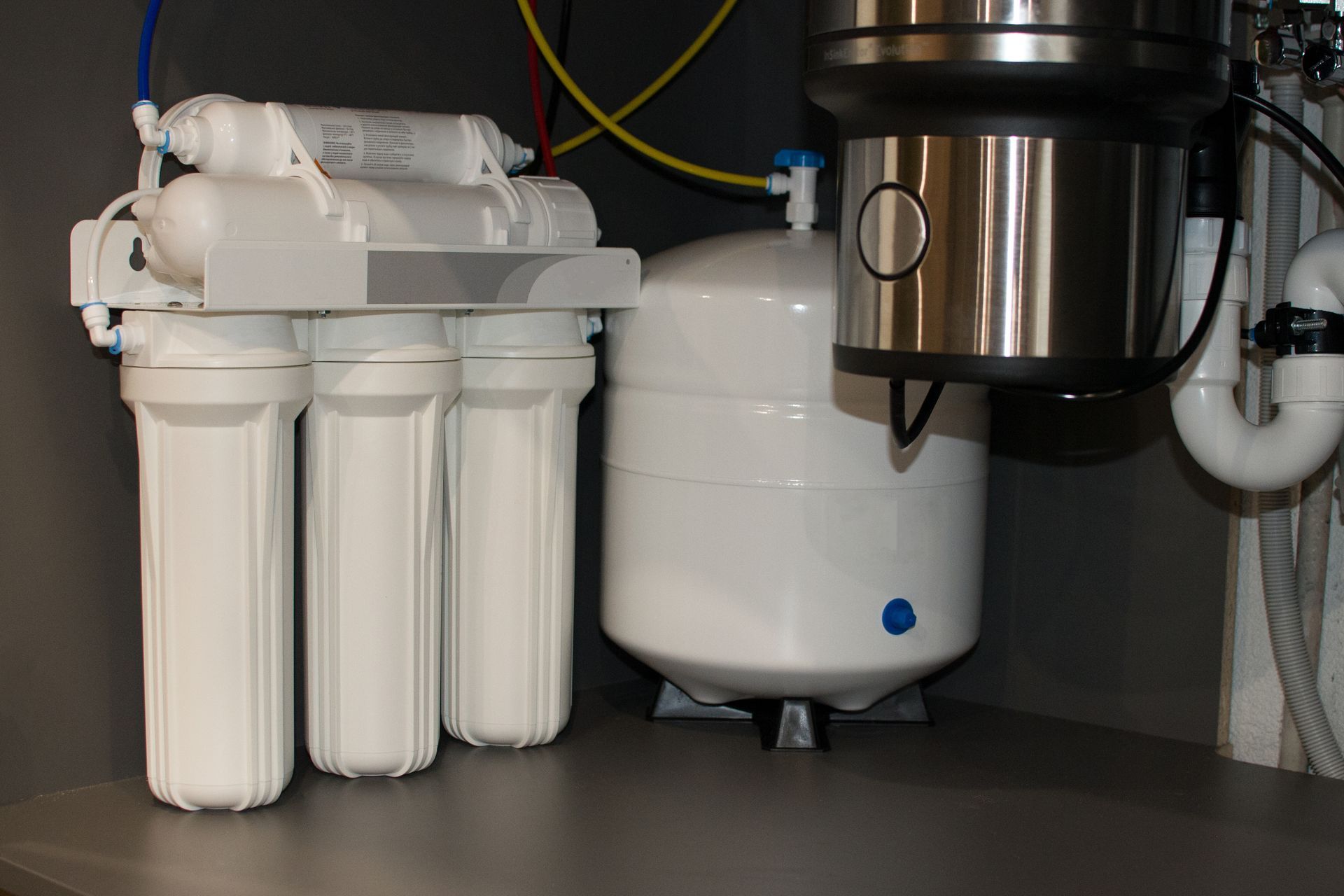
A reverse osmosis system pushes water through a semi-permeable membrane to remove dissolved contaminants down to a very small particle size. Most under-sink units store filtered water in a small tank and deliver it through a dedicated faucet. The result is exceptionally clean water where you use it most: drinking and cooking.
For homeowners in Moline, IL, RO filtration at the kitchen tap addresses the contaminants that matter most for what you consume, including the trace PFAS compounds confirmed in Moline's municipal supply. Chlorine taste and odor are also more noticeable in winter, when colder water retains disinfectant longer.
What RO Filtration Typically Removes
- Dissolved heavy metals such as lead and chromium.
- PFAS and PFOA compounds.
- Nitrates from agricultural runoff.
- Chlorine, chloramines, and their byproducts.
- Sediment and total dissolved solids.
How Does Whole House Water Filtration Work?
Whole house filtration treats every drop of water at the point of entry, typically using carbon-based or multi-stage filtration to reduce chlorine, chloramines, sediment, and certain chemical compounds across every faucet, shower, appliance, and hose bib. It does not filter as deeply as a reverse osmosis membrane and generally does not remove dissolved solids or PFAS.
For Quad Cities homeowners dealing with high mineral hardness, whole house filtration paired with a water softener addresses hard water scale throughout the home, protects appliances, and extends equipment life.
What Whole House Filtration Typically Addresses
- Chlorine and chloramine taste and odor at every tap.
- Sediment and particulates throughout the home.
- Certain volatile organic compounds (VOCs).
- Improved water quality for bathing, laundry, and appliances.
Side-by-Side Comparison
| Feature | Reverse Osmosis | Whole House Filter |
|---|---|---|
| Filtration location | Single point of use (kitchen tap) | Entire home at entry |
| Contaminant removal depth | Very high (membrane-level filtration) | Moderate (carbon/sediment filtration) |
| PFAS removal | Yes, typically very effective | Generally not effective |
| Hard water treatment | No | Not on its own; pairs with softener |
| Best for | Drinking and cooking water | Whole-home water quality |
| Maintenance | Filter and membrane replacement | Filter replacement |
Which Is Better for Quad Cities Water Conditions?
The answer depends on your water test results, not a general rule. Moline's water commonly contains both elevated hardness minerals and trace contaminants like PFAS, so many homeowners benefit from more than one type of treatment. An RO system handles dissolved contaminants you consume directly; a whole house filter handles chlorine, sediment, and water quality everywhere else.
Older homes in Moline, Rock Island, and East Moline may also carry lead risk from interior plumbing, particularly structures built before 1980. RO filtration at the kitchen tap reduces lead exposure at the drinking water source; a whole house filter alone typically cannot.
A tap-specific water test matters more than the city's system-wide averages, since conditions vary by neighborhood.
Which System Is Right If I Only Have One Budget?
If you can only install one system, start with your biggest concern. If it is what you drink and cook with, a reverse osmosis system is the more targeted choice for dissolved contaminants, including PFAS. If it is scale buildup, appliances running poorly, or chlorine smell throughout the house, a whole house filter paired with a softener addresses those issues more broadly. A free water test shows what your tap water actually contains, so the decision is based on your home.
Do I Need Both an RO System and a Whole House Filter?
Many Quad Cities homes benefit from both. A whole house filter improves water for bathing, laundry, and appliances, while an RO system adds deep filtration for drinking and cooking water. Together they address the full range of concerns common to the Moline, IL, area, from hard water scale to trace chemical contamination.
Get the Right Answer for Your Home With a Free Water Test
Midwest Water Company serves the Quad Cities region, including Moline, Rock Island, Davenport, and Bettendorf. A free in-home water test checks hardness, pH, chlorine, iron, and other key indicators at your specific tap, giving you real numbers rather than regional averages. From there, you get a clear recommendation based on what your water needs.
To schedule your free water test or ask about reverse osmosis system and whole house filtration options, contact us online or call (309) 702-2424. You can also learn more at the Quad Cities water quality facts page.
Find Midwest Water Company on Google Maps to read reviews and connect with the team.
Recent Posts